Labels

Wednesday, November 18, 2015

Small Moments, BIG Impacts: Written Reflection 3 - Chandler Unfried


Team Huddle after the Practice 5K. 
Little moments and small occurrences that mean almost nothing to other people can have huge impacts on us.  They can stop us in our tracks and put life into perspective.  I was not having the best day on Monday.  I was stressed out, and to be honest, I was feeling sorry for myself.  A lot had been going on, and I was letting it affect my mood.  I went to Girls on the Run, and although I was happy to see the girls, I was still in a “funk” as my mother described it when I was in high school.  We did the lesson, warmed up, and began to walk to our running “track” (the parking lot).  That’s when the moment happened.  It was the smallest thing, but it cheered me up incredibly.  One of the girls who I had gotten closer to over the past few weeks came up to me as we walked to the lot.  First, I need to mention that the 5K is this Saturday and every girl chooses a “Running Buddy” for the race.  Most of the girls run with a parent, but this child’s parents could not be in attendance.  On a previous day, she opened up to me about her father passing away, and on that day, she told me that her mother had hurt her ankle.  I was on the fence about running the 5K.  I have already gone over the required number of hours and running the race would mean driving to Keeneland at 7:30 on a Saturday morning (Caturday specifically).  She looked up at me with hopeful eyes and asked if I would be her “Running Buddy” – such a simple request but such a meaningful one.  It stopped me and made me reflect.  Yes, I was having a bad day, but that didn’t matter anymore.  In that moment, my role at Girls on the Run became clear.  I am making a difference in the lives of these girls, and I would not trade that for anything.  There was no more thinking to be done.  I am running the 5K, and I am running it with the sweet little 9-year-old girl that has shown me how to appreciate life.  She has not had the easiest life, but she is happy and making the most of it.  Each child at GOTR brings a different quality to the group, and each has something different to teach me.  As we come upon our last meeting, I am hoping that I have taught and impacted these girls as much as they have for me. 

Our GOTR Team after our Practice 5K
Photo by Naresha Howard

Tuesday, November 17, 2015

Analyzing a TED Talk - Kylie Russ


Today I came across a TED Talk about the unrealistic portrayal of women in today's media.  This talk would have been powerful for any audience, but it was especially influential over me because it's closely tied to the struggles that Girls on the Run tries to combat. Jean Kilbourne performed this speech, titled "The Dangerous Ways Ads See Women", in 2014.  Over the course of the 16 minutes that she was speaking, she was able to captivate my attention and demonstrate how ads create an artificial "ideal" that is impossibly thin and overly sexualized.

Jean Kilbourne- The Dangerous Ways Ads See Women

Kilbourne was so effective in communicating this idea because, for one, she was clearly passionate about it and "stayed in her lane".  She began by telling a personal story, revealing her interest in the topic: she worked in the media business and modeled on the side, but quit because she felt objectified and alienated. However, this sparked her fire in the concept of beauty.  She's been collecting ads and speaking about the portrayal of women since the late 1960s!  Clearly she is very passionate about this topic, and her powerful spirit was contagious.  This also enhanced her "conversational quality", simply because the audience felt so connected with her.  She didn't talk too fast or too slow. She didn't walk around, but wasn't still. She talked with her hands but didn't overdo it. She had a presence on stage that made her worth listening to.

Secondly, Kilbourne cleverly used a presentation aid to enhance her talk. The PowerPoint was only images of ads that supported her point, so it wasn't distracting or confusing to follow.  There were "jaw-dropping" moments within these images, as some were so blatantly sexual or insulting that it was shocking.  In fact, some of these disturbing ads were published in Teen Magazine, targeting 12 year old girls.  It was heartbreaking to realize that at such a young age, girls are already feeling like they have to be thin and sexy in order to be beautiful.

In order to lighten the mood from these loaded ads, however, Kilbourne also skillfully incorporated humor into her speech. She used humorous comments to point out how photoshopped and ridiculous the images were.  At one point, there was even a photo of someone's body with little clothing on. The photo got national attention via media - to which she commented, "Well, at least it got some coverage!" 
Kilbourne's audience laughing at her humorous comments.
Her passion, use of images, and humor were enough to make the speech fly by.  Although it was 2 minutes shy of the 18 minute rule, I didn't feel like she left anything out. The time frame was effective in creating a multi-sensory experience. Her message was not only heard, but was also felt tugging at the hearts of her audience.  

Particularly, I got a lot out of this TED Talk because it made me realize just how vulnerable the GOTR girls are. The media puts such high pressure on women to look young, thin, and hot. Subconsciously, these girls are comparing themselves to the impossible standards seen in ads. Self esteem often plummets when girls reach adolescence. The girls I work with are in ages 3rd through 5th grade; they are right about to enter the puberty stage where confidence is most vulnerable! It is our job to make sure that they know that they are beautiful just the way they are, in hopes that ads (like those presented by Kilbourne) never bring girls down.


Analyzing a TED Talk- Katie Strickland

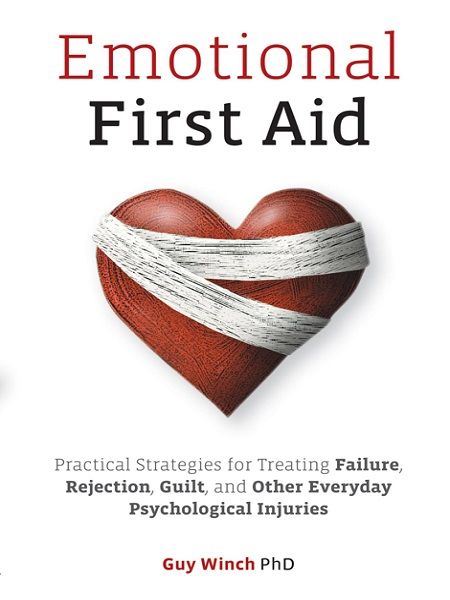
 Girls on the Run focuses on building good self-esteem, which led me to pick a Ted Talk given by Guy Winch that focuses on how to take care of yourself emotionally, just how we take care of ourselves physically. Taking care of yourself emotionally goes hand in hand with having good self-esteem because if someone allows themselves to have negative thoughts, then his or her self esteem will plummet. Guy Winch, a psychologist, gave his Ted Talk presentation in November of 2014. The speech he gave was titled "Why We All Need to Practice Emotional First Aid" and was presented to an audience at Linnaeus University.

Winch opens up his Ted Talk by telling the audience that he grew up with a twin. He told a short, funny story how even the slightest bit of difference in his brother's portions of food would lead him to believe his brother was the favorite. Winch's story at the beginning was effective in capturing the audience's attention because many of those in the audience could relate to this idea of favoritism if he or she grew up with a sibling. Winch then uses this idea of favoritism to introduce his topic and how becoming a psychologist made him realize that a majority of people participate in favoritism. This common favoritismWinch discovered is how people favorite their physical health over their emotional health, body over mind. Throughout the entire speech Winch is effective in keeping the audience's attention because his Ted Talk is relatable in how he tells stories of his own failure and loneliness, which are both feelings that those in the audience were sure to have experienced before. Winch's excellent story telling is also complimented by his conversational quality because all throughout his speech he refers to people as "we" including himself with the audience and asks the audiences questions for them to think about and answer themselves.


I found Winch's speech very interesting and was also able to learn a few new things from it. One of the biggest things I took from Winch's speech was how to handle negative thoughts about yourself. The simple solution is to just think about something positive until that feeling of negativity passes and if this is consistently done, a person's outlook on life could become overall more positive in just one short week. Though Winch failed to deliver any jaw dropping moments he did make a connection between physical and emotional health that really made you realize how important emotional health is. Winch told the audience that failing to take care of yourself emotionally can lead to physical health problems such as alcoholism, eating disorders and depression. In a world where people care so much about their bodies everyone needs to realize that to properly care for one's body, one needs to care for their emotional wounds too such as failure, rejection and loneliness. Throughout the speech, Winch uses humor by making fun of himself. Doing this makes Winch more relatable because he is down to earth enough to make fun of himself, something not everyone is capable of.

Winch completed his Ted Talk in a total of seventeen minutes and twenty four seconds. The Ted Talk did not even seem to last that long because Winch used stories throughout the entire speech and humor, which holds your attention and interest as you listen. The time also flew by during the speech because of the multisensory experiences Winch would send you on. The descriptive stories and language Winch used helped paint mental pictures in the audience's, allowing the audience to better understand the importance of emotional health. Not once did Winch stray away from being in his own lane. Winch's own stories of emotional trauma helped give his speech more credibility in how the methods he talked about helped himself when he was emotionally wounded.

I think Guy Winch's speech should be watched by everyone. People need to realize that kids and adults need to be taught how to take care of themselves emotionally because in doing this the quality of everyone's lives will improve greatly. People will begin to feel more confident in themselves and because of this will become more likely to reach for higher goals. I enjoyed watching this Ted Talk and know that I have learned some valuable ways to help take care of myself emotionally.

Written Reflection 3 - Allison Butler

"Girls on the Run is so much fun!" This is a chant we exclaim at the end of almost every Girls on the Run practice, and it's true. But, Girls on the Run is so much more than fun. A couple weeks ago, we had our practice 5k. Our job there is primarily to act as running buddies, so I ran the 5k with a sweet third grader who I noticed was running alone. The conversation had during this run really showed me the purpose of my presence at Girls on the Run. It went something like this.
"So, do you have any siblings?"
"No. I'm an only child."
"Do you like being an only child?"
"Sometimes. It's kind of lonely. My mom always says she will play Battleship with me but she never does because she's too busy."
This sweet, innocent little conversation revealed so much to me. Since, I have had similar conversations with several of the girls. One told me out of the blue "I have a busy life." Another told me that she has gone home with another girl from Girls on the Run every day since first grade, because both of her parents work. She told me that it was fun, but that she prefers to eat with her parents.
This, this busyness and lack of quality family time, is so normal for this generation. The pressures of our society are building, and these sweet, sweet girls at Girls on the Run often express to me without even meaning to some of the issues they deal with that are often because of that pressure.
There is not much I can do to change the entire scope of our culture's demands, but that does not mean I am helpless.


The idea behind this quote is that, although alone we cannot change the world, we can each work on changing one person at a time. I can start by offering a listening ear and my undivided attention to these girls once or twice a week. I can encourage them to achieve their goals, beginning with completing the Girls on the Run 5k on Saturday. I can show them that they are worth my time, and hopefully, these little acts now will contribute to how they view themselves in the future. I would encourage anyone, whatever social issue you are facing, to not be discouraged by the vastness of it, but to know that you can make a difference, even if it's in the smallest of ways. You never know how a small act of kindness now can affect someone later, and if we all work on just changing the lives of those right around us, eventually, world change is possible. All of these girls have the potential to be world changers, and it is an honor and a joy to run alongside them each week!

Monday, November 16, 2015

Analyzing a TED Talk - Chandler Unfried

In 2012, Cameron Russell, Victoria's Secret model, stood in front of a TED conference to present a talk entitled “Looks aren’t everything.  Believe me, I’m a model.”  Surprising topic?  Yes, but it presented an issue of self-image that was moving and effective.  As a model, she knows about image better than most anyone.  Her job revolves around looks and images.  Speaking on the topic was an easy way for her to unleash the master within.  This message about image and perception being superficial coming from a person who lives off it validates the talk.  Her passion for confidence in is clear.  Her talk was fearless and unapologetically honest. 

Cameron Russell at Victoria's Secret Fashion Show
Cameron Russell at 2012 MidAtlantic TED Conference


Storytelling is key in relating to and gaining the trust of an audience.  Russell tells stories about her life at the times that certain photos were taken.  She shows the contrast in home and modeling pictures taken on the same day to illustrate how superficial images can be.  She connected to the audience in a strong way, even with a photo of herself from Vogue projected.  She is more than an image.  When she began speaking this became clear.  The entire speech was very relaxed and conversational.  As a model, she could easily come off as intimidating, especially while discussing looks.  She relates with her audience, however, in a conversational tone that makes her real and relatable. 

Slide from TED Talk - "Same Day"

I learned a lot from her talk.  Image is powerful but superficial.  Looks are not everything, but many people are unhappy because of theirs.  “53% of 13-year-old American girls unhappy with their bodies, this grows to 78% by the time they are 17 (Maine, 2011)” appeared on her screen.  She concentrated on self-esteem and body image, issues very important to Girls on the Run.  Last week, we looked at similar images and discussed why they are not always healthy or realistic.  This issue gives her talk purpose.  This issue isn’t new, however.  How did she make it her own?  She used a jaw-dropping moment.  By walking out in a tight, short dress and changing into something much more modest within the first minute of the talk made the audience think.  There’s no doubt several people judged Russell when she walked onto stage solely based on her appearance, but soon they realized that they were wrong.  The audience was taken back by their assumptions.  This produced a hook to the audience’s ethos immediately and kept them engaged.
In her perfectly timed 9-minute, 37-second talk, she employed humor to humanize herself and engage her audience.  She joked about reading Twitter and seeing their initial reactions to her appearance to break the tension from her opening outfit change.  This was successful and warmed her audience up, an audience that was most likely intimidated by her at first.  She even mocks her own industry for a moment by describing the steps of taking a “walking shot” – bouncing back and forth, laughing at her “imaginary friends.”  She humanized herself and her colleagues by making fun and not taking herself too seriously.  She was honest and genuine with her humor making her speech as a whole more effective. 

Slide from TED Talk - "Walking Shot"

Overall, Russell’s talk is focused.  She stays in her lane and keeps her audience fully attentive by using multisensory experiences.  She paints a mental picture with her words, visuals, and humorous demonstrations that support her argument in the superficiality of images.  Her talk is effective because of this in addressing the issues of self-image and self-esteem of girls everywhere.  These issues are extremely important to Girls on the Run.  Because of this, I enjoyed the TED Talk and found it very interesting.


Sunday, November 15, 2015

TED Talk Analysis - Parker Michel

I watched three Ted talks around the topic of self-esteem, and finally found one that spoke to me and was relatable to Girls on the Run. This TED Talk, called “Meet Yourself: A User’s Guide to Building Self-Esteem” was given by Niko Everett on February 8, 2013 at the TEDxYouth Conference at Bommer Canyon, CA.


Niko began her talk with a narrative, that I think was effective in capturing the audience and making her topic more relatable. She began by detailing thoughts she had about herself at different ages: when she was young, she hated her freckles, when she was a teen she was embarrassed of her mom, and she threw up to make herself skinny. At every age, there was something she did not like about herself. These stories made her topic relatable--everyone struggles with how they see themselves.  


Niko did well with making it seem like she was talking to me. I don’t know if it’s just because I could relate, but everything she said made sense. Her body language, facial expressions, and the look in her eyes made me feel like she felt for me, that she had empathy and compassion for me and her audience. Although Niko did not really bring in any jaw-dropping moments, she brought in one shocking statistic. I learned that 1 in 4 girls have sex for the first time more because they think people might like them more if they do. This idea, that people might like us if we do something as monumental and important as having sex for the first time is not rare. I do things and my friends do things just because other people are doing it.


Because this topic was pretty serious, Niko did not really have to bring in humor to make it more effective. There were a few lighter moments, but none that made me laugh. She did not hit the 18 minute mark, and I think she could have told more stories about her work and herself to drive home her ideas. Niko had a powerpoint at the end, that quickly detailed ways that she has found effective to build self-esteem. This powerpoint was simple, which made it effective. Her ideas to build self-esteem are:

From fashion-italy.blogspot.com


1- Spend time with people who make us feel good. Niko said to find "our Julie"--your best friend.

2- Turn up the volume on positive thoughts and delete negative ones--try to push the negatives out and let the positive thoughts reverberate.

3- Tell others what we like about them--help jumpstart their positive thinking. Helping others feel good about themselves can help us feel good.

4- When we receive compliments, stand our ground, look giver in the eye, let it in, and say thank you. We have to learn to take compliments.

From kyrm.org
These ideas have helped her and the young girls she works with. Receiving compliments has always been hard for me, and I imagine it’s sometimes hard for others. At Girls on the Run, we do thing called Spirit Awards. The girls nominate another girl and give her an award--it could be something little, or something big. Most of the time, awards are given to a girl who ran the whole time even if she was tired, or who paced herself, or who stuck with her friend the whole time. These awards give the girls the boost that they need. They feel someone has recognized their efforts so it makes it easier for them to do it. Niko’s ideas to boost confidence definitely help, and I hope that we can try to implement some of these ideas into Girls on the Run. I love seeing the girls happy and feeling good about themselves.
Giving Spirit Awards at GOTR

Saturday, November 14, 2015

Analyzing a TED Talk - Allison Butler


The other day, I sat down and watched a Ted Talk entitled “Why thinking you’re ugly is bad for you.” This title caught my eye because I think it addresses in issue everyone struggles with on some level, but especially the young girls I work with on Girls on the Run. This talk was given by Meaghan Ramsey on the TED stage in September of 2014. She has credibility with this issue because of her work with the Dove Self-Esteem Project. She presented this topic to the TED audience and to inform them, and the many that have watched her video online since, about the dangerous consequences of low self-esteem. I don’t know much about the audience she was speaking to, but she did a good job of making everything simple enough that anyone could understand her points.
                  She opened the talk in a very light-hearted way, by showing a picture of her infant niece and telling a sweet story about her niece kissing and giggling at her reflection. I liked this opening, because it warmed the audience up to the speaker and you could immediately see how it related to her topic. She then immediately goes into another story, this time about a young girl feeling ugly and turning to social media for feedback. This story is very different than the last, but it also captures the audience’s emotional attention. It leaves us feeling like we care and want to hear a solution. Throughout her storytelling, the speaker did a good job of shifting her eye contact throughout the audience and changing her inflection to fit the mood of each story she told. Even though I was watching on a computer screen, I felt connected to the speaker, which made want to keep listening.  
                  She then goes into detailing the pressures of social media today’s youth face daily, and creates public resonance by showing shocking pictures that bombard kids which we have all probably seen before on social media. Below is a screenshot from Ramsey’s TED Talk. (http://www.ted.com/talks/meaghan_ramsey_why_thinking_you_re_ugly_is_bad_for_you#t-203720).
                  After showing this image along with a few others, she gives many surprising statistics about how low self-esteem related to appearance affects academics. These statistics both interest the audience and give credibility to the speaker.
                  The main critique I have about this speech comes toward the end, when the speaker gives some statistics about absenteeism in women and then jumps to some conclusions about how this might affect our economy. Although she didn’t really say anything concrete, what she was implying seemed like a bit of a far cry from the statistics she gave, although I did understand where she was coming from.
                  Overall, I thought the talk was really good. She started out with an emotionally stimulating introduction, backed it up with statistics and finished with three main points for a solution. As we have learned, three is a good number of points that people will focus on and remember. The speaker also ended with a screen that showed the picture of her niece from the beginning with the hashtag #kissthemirror. I thought this was a very effective conclusion, that tied the whole talk together and gave a key phrase to remember the talk by. She didn’t use the full eighteen minutes that a normal TED Talk uses, but I thought the twelve minutes she did use were timed nicely and I don’t think she necessarily needed the last six minutes. Other than the potential slippery slope in the middle, I found this talk to be both interesting and informative, and there is a lot to learn from it.